

Last verified October 2026
Sophie Marchant, Staff Writer.
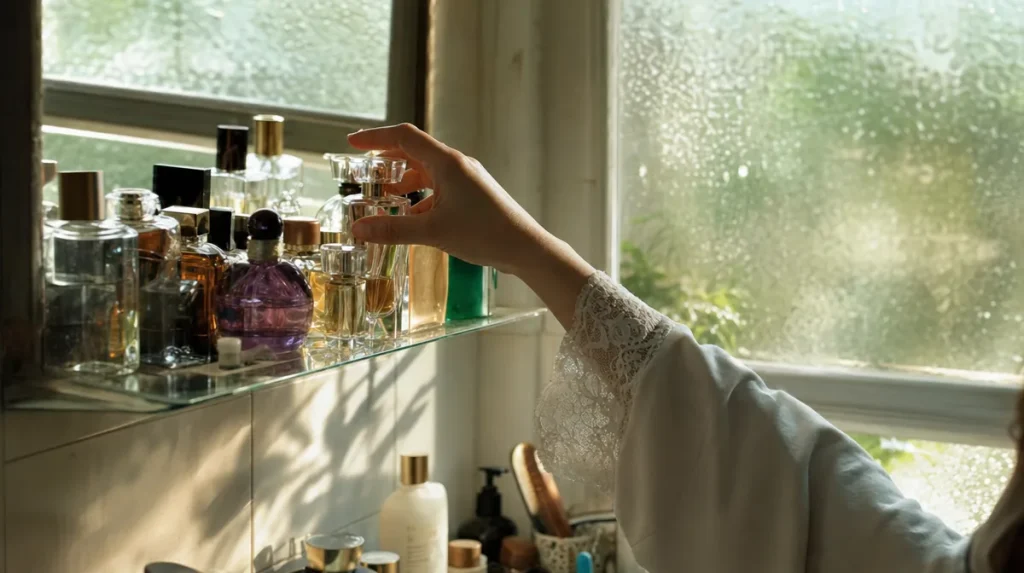
There is a particular moment in front of the bathroom mirror, usually just before leaving the house, when a woman realises she has four or five part-used bottles of eau de parfum lined up on the shelf and cannot say with any confidence which one she is actually wearing. She reaches for whichever is closest, sprays twice on her wrists, and walks out wondering whether it still smells like it did when she bought it, or whether it has quietly turned since last Christmas.
The fact that trips up most beginners: eau de parfum is not a brand name or a marketing flourish, it is a concentration, and that single detail on the label changes almost everything about how a scent behaves on a particular person’s skin. Once you understand what that word actually means, choosing a fragrance stops being guesswork at a crowded counter and starts being a method you can repeat.
This guide works through what genuinely matters when starting out with eau de parfum, where beginners usually go wrong, and how to test a bottle properly before committing to it.
- Concentration is not decoration: eau de parfum, eau de toilette and extrait de parfum describe different percentages of fragrance oil, and that percentage affects how long a scent lasts far more than the brand on the box.
- Skin chemistry rewrites every fragrance: the same bottle can smell markedly different on two people, or on the same person in winter versus summer, because warmth, moisture and natural oils all change how a scent develops.
- Patience beats impulse every time: a fragrance judged within the first ten minutes is only showing you its top notes; the real character often only appears after two hours or more.
Why The Same Bottle Smells Different On Different Days
Eau de parfum that smelled rich and warm in the shop can turn thin or oddly sharp by the time you get it home, and many beginners assume the bottle is faulty. It usually is not.
Fragrance interacts with the oils on your own skin before anyone else smells it. Someone with drier skin, which is common in the UK through a damp winter and months of central heating, tends to lose the top notes faster and is left mostly with the base notes. Someone with oilier skin holds onto a scent longer and may find it reads stronger by evening than it did at ten in the morning.
Think of it the way tea tastes different depending on the water used. The leaves do not change, but soft water draws out the flavour differently to hard water. Your skin is the water.
The mistake most beginners make is judging a fragrance in the first five minutes, in a shop, on a wrist that has just come out of gloves. That tests the alcohol and the top notes, not the perfume itself.
A fairer test: spray once on the inside of your wrist, leave the shop, and smell it again after walking around for twenty minutes. If you still like it after an hour, your skin chemistry is working with the scent rather than against it. If it has gone sour or strange, it probably will again next time, whatever the bottle promises.
Reading The Strength On The Label, Not The Price
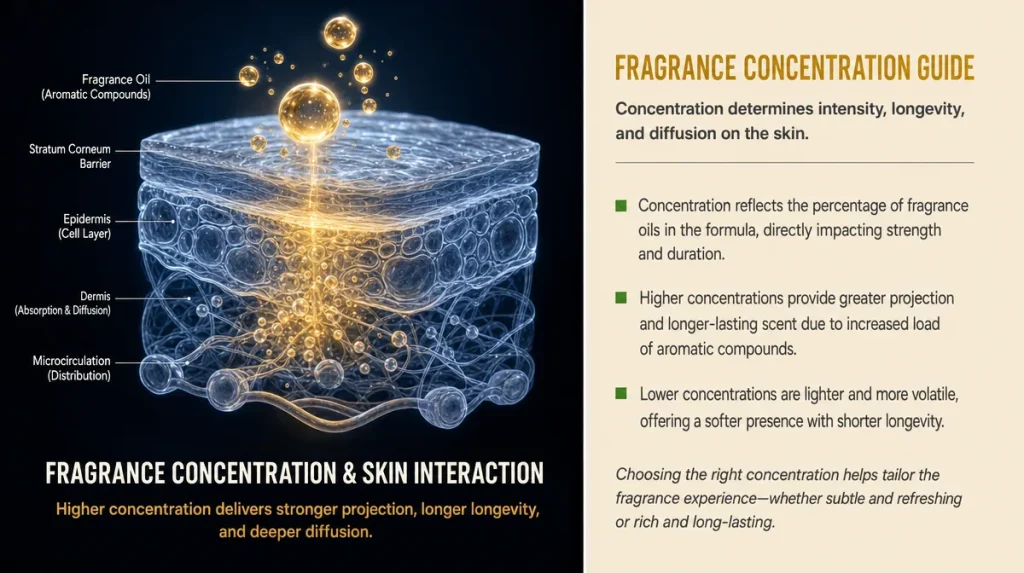
Eau de parfum, eau de toilette, eau de cologne and extrait de parfum are not marketing names, they are percentages. Eau de parfum typically holds somewhere between 15 and 20 per cent fragrance oil, eau de toilette closer to 5 to 15 per cent, and extrait de parfum can run to 20 per cent or higher. Cologne usually sits under 5 per cent.
In practice, a higher concentration generally lasts longer on skin and projects further, while a lower one is lighter and fades sooner, which is why eau de toilette is often positioned for daytime and eau de parfum for evening.
None of this is a guarantee on its own. A poorly blended eau de parfum can smell weaker than a well-made eau de toilette, because concentration is only one factor alongside the quality of the raw materials and how the formula is put together.
The label is still worth reading properly before buying, whether you are standing at a department store counter or scrolling a listing on Amazon.co.uk. If a product does not state its concentration anywhere, treat that as a gap in the information rather than a reason to assume generosity. Good Housekeeping’s consumer advice has long urged shoppers to check what a label actually states rather than relying on a bottle’s weight or box design to imply strength.
Choosing A Scent Family Before A Specific Bottle
Walking into a perfume hall and sampling bottles at random is the fastest way to end up with a headache and no clearer idea of what you like. A more useful starting point is working out which broad family you already gravitate towards: floral, oriental (sometimes labelled amber), woody, or fresh and citrus.
Most women, when they are honest about the fragrances they have worn for years and genuinely enjoyed, find they sit mostly within one or two families. Someone who likes rose, jasmine or peony candles and soaps is probably floral. Someone drawn to vanilla, warm spice or incense is likely oriental. Someone who prefers clean laundry, citrus or green notes is probably fresh.
This matters because a fragrance counter will often present fifteen bottles with no obvious order. Marie Claire UK’s beauty pages have made a similar point in their fragrance features: knowing your family before you arrive narrows a wall of options down to three or four worth testing, rather than fifteen.
A quick self-test: think of the last three fragrances, candles or scented products you bought instinctively and kept liking for more than a season. If two of the three share a dominant note, that is your starting family. Build outward from there rather than beginning from zero each time.
Testing On Skin, Not On Paper
Perfume counters hand out paper blotters for good reason: they let a shop test a dozen fragrances quickly without customers smelling of six different scents at once. But paper has none of the skin’s warmth, oils or pH, so it only shows the top notes in isolation.
A paper strip is useful for ruling things out fast. If a scent smells wrong on paper within seconds, it is unlikely to improve on skin. It should never be the basis for a final decision.
For anything seriously under consideration, ask for a sample to take home, or buy the smallest size available, often a travel bottle from the high-street chemist or a sample set from Look Fantastic. Wear it for a full day, including after a shower the next morning when the skin’s natural oils have reset.
The mistake worth avoiding is buying a full bottle on the strength of one spray at a counter on a day when you were already wearing hand cream, since layered scents on the skin will distort almost anything tested over them.
Giving A Fragrance Time To Develop
Every eau de parfum is built in three stages, usually called top, heart and base notes, and these are not separate ingredients sprayed in layers, they simply evaporate at different speeds.
Top notes, often citrus or light florals, are the smallest, lightest molecules and are first to lift off the skin, usually within fifteen minutes. Heart notes, typically florals, spices or fruit, settle in over the next hour or two and form what most people consider the scent’s actual character. Base notes, such as musk, woods, amber or vanilla, are the heaviest molecules and can still be present eight hours later, long after the top notes have gone.
A 2021 study published in the journal Flavour and Fragrance noted that perceived scent character shifts measurably across the first four hours of wear as these layers evaporate at different rates, which helps explain why a fragrance can smell quite different by evening compared with the moment it was first applied.
The practical lesson: never judge a perfume within the first ten minutes. That is roughly equivalent to reviewing a three-course meal after one bite of the starter. Wait at least two hours before deciding whether you actually like it, and smell your wrist again before bed to meet the base notes properly, since they are often what decides whether a bottle earns a permanent place on the shelf.
Layering Without Doubling Up
Many ranges sell a matching body lotion, shower gel and eau de parfum under one name, and layering them can genuinely extend how long a scent lasts, since moisturised skin holds fragrance oils better than dry skin, particularly through a damp British winter when central heating dries out the skin barrier faster than cold air outside does.
The mistake is assuming more product always means more scent. Spraying perfume over a strongly scented body lotion from an unrelated range often creates a clash rather than a richer version of either, since you are combining two unconnected note structures rather than reinforcing one.
A safer approach: use an unscented or lightly scented moisturiser as the base, then apply the eau de parfum on top, focusing on pulse points where skin runs warmer, such as the insides of the wrists and the base of the throat. Avoid rubbing wrists together after spraying, since friction breaks down the top notes faster and can alter how the scent develops over the following hour.
Storing A Bottle So It Lasts
A bottle left on a sunny windowsill or in a steamy bathroom cabinet degrades faster than one kept somewhere cool and dark, because heat, light and humidity all speed up the breakdown of fragrance oils and the alcohol they are suspended in.
The visible signs of a perfume that has turned are a change in colour, usually darkening, and a flattened or slightly sour smell where the top notes used to be bright. Once a bottle smells noticeably different from when you bought it, no amount of letting it settle will bring it back.
Stored properly, in a drawer or cupboard away from direct sunlight, most eau de parfum keeps its character for three to five years, sometimes longer for heavier, amber-based scents. Opened bottles degrade faster than sealed ones, since each spray lets a little air into the bottle.
If you are buying several bottles when they are on offer, which happens often around the Boxing Day sales, it is worth asking whether you will realistically get through each one within a few years, rather than buying purely because the price looks good on the day.
Spotting Marketing Language Versus Real Substance
Terms like long-lasting, intense sillage and 24-hour wear appear on almost every bottle and mean very little on their own, since there is no single regulated test that every fragrance house applies in the same way before printing those words on a box.
Which? has previously tested household products for genuine comparative performance against marketing claims, and the broader lesson transfers well to fragrance: a claim printed on packaging is not the same as an independent measurement, and the only reliable test is wearing a specific bottle on your own skin for a full day.
Equally, a high price does not guarantee a fragrance will suit you, and a modestly priced eau de parfum from a chemist’s own-brand range can outperform a far more expensive one on your particular skin, because performance depends heavily on how the oils interact with individual chemistry rather than the cost of the ingredients alone.
What is worth attention: whether a brand states its fragrance family and concentration clearly, whether reviews mention how a scent develops over hours rather than only the first impression, and whether you personally still enjoy it after a full day of wear, repeated over several days. That is a more reliable guide than any claim on the box, however confidently it is printed.
Key Takeaways
Choosing an eau de parfum well is less about finding the right brand and more about understanding a few mechanics: concentration determines staying power, skin chemistry determines how a scent actually develops, and time determines whether you are judging the real fragrance or just its opening moments.
Most disappointing purchases trace back to skipping one of these: deciding too fast, testing on paper instead of skin, or trusting a claim on a box rather than a full day’s wear.
A Short Checklist Before You Buy
- Check the label for concentration (eau de parfum, eau de toilette or extrait), not just the brand name
- Identify your usual scent family from fragrances you have already liked for a season or more
- Test on skin, not paper, and wait at least two hours before judging
- Avoid deciding within the first ten minutes of spraying
- Store bottles away from sunlight, heat and bathroom humidity
- Treat long-lasting and 24-hour claims as marketing language, not guarantees
- Buy a sample or small size before committing to a full bottle
This article is general information and does not replace advice from a qualified professional.
Individual results and preferences vary from person to person.